
Apple iPhone 17e Launches on March 2, 2026
The Apple iPhone 17e is set to launch on March 2, 2026, featuring the powerful A19 chip, MagSafe, and Dynamic Island technology at a price of $599. Discover everything you need to know about this exciting release.
TECH NEWS
3/2/20265 min read
Apple iPhone 17e launches today as five-product week begins
Apple iPhone 17e arrives March 2 with A19 chip and MagSafe at $599, kicking off the company's biggest launch week of 2026. Here's what you need to know before you buy.
Apple has confirmed a multi-day product blitz starting today, March 2, 2026 — and the iPhone 17e is the opening act. The $599 device upgrades its predecessor with Apple's A19 chip, MagSafe charging, and a new front camera, while maintaining the single-rear-camera, 60Hz formula that keeps the price accessible. What follows over the next two days is equally significant: new iPads on March 3 and MacBook Pro models powered by the M5 Pro and M5 Max chips on March 4. Five major products in three days is an unusual cadence for Apple, and it signals a company that's accelerating its hardware refresh cycle as AI features become the primary competitive differentiator.
The iPhone 17e is not Apple's most exciting phone of the year — that's by design. It exists to pull buyers out of the Android mid-range and to upgrade iPhone 16e owners who skipped last year's model. What's changed matters more for the long term: MagSafe support, introduced here for the first time on an 'e' model, locks the 17e into Apple's growing accessory ecosystem and eliminates the one tangible reason to pay more for a standard iPhone 17 if you don't need 120Hz.
What's new in the iPhone 17e
The iPhone 17e is a meaningful step up from the iPhone 16e, even if the design changes are subtle. The headline additions:
A19 chip: The same processor generation as the standard iPhone 17, delivering AI inference performance capable of running Apple Intelligence on-device. The non-Pro A19 variant won't match the A19 Pro in the iPhone 17 Pro, but for the tasks most users perform — email summarization, photo cleanup, live translation — the difference is imperceptible.
MagSafe: Apple's magnetic wireless charging system arrives on the 'e' line for the first time, enabling faster wireless charging (estimated 20–25W vs. the 16e's 7.5W Qi) and compatibility with the full MagSafe accessory range including wallets and stands.
C1X modem with N1 wireless chip: Apple's second-generation in-house cellular modem, paired with a new wireless chip for improved Wi-Fi and Bluetooth performance. This marks a significant step in Apple's multi-year plan to eliminate Qualcomm modems entirely.
18MP front camera: A square-sensor upgrade from the 12MP selfie camera on the iPhone 16e. This matters for video calls and the AI-powered Visual Intelligence features Apple has been building into its camera stack.
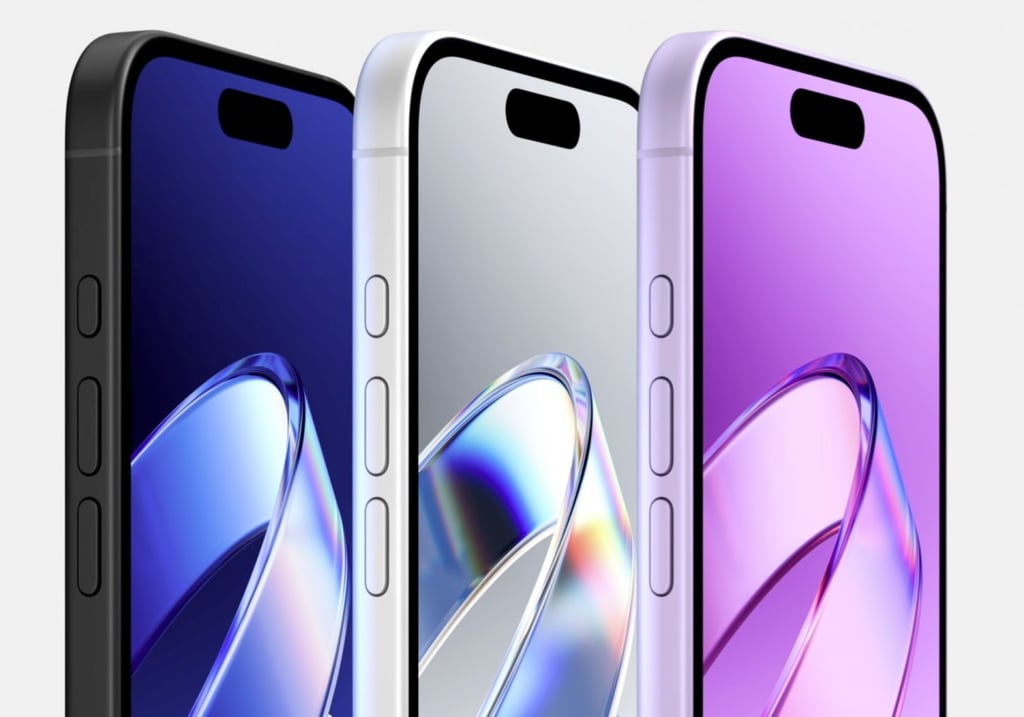
Dynamic Island: Replaces the traditional notch with the pill-shaped Dynamic Island used in all other iPhone 17 models, keeping the UI consistent and enabling Live Activities.
256GB base storage: Doubles the entry-level from the 16e's 128GB — practically necessary as Apple Intelligence and on-device AI models consume more local storage.
What doesn't change: the display remains 6.1-inch OLED at 60Hz. No Always-On. No ProMotion. One rear camera (48MP Fusion). Black, White, and Purple color options. Starting price holds at $599.
The 60Hz question
The one spec that will drive buyers away from the 17e toward the standard iPhone 17 is the 60Hz refresh rate. Apple introduced 120Hz ProMotion across the standard iPhone 17 lineup in 2025, making the 17e the only new iPhone without it. For users who switch from any current-generation Android flagship — nearly all of which ship with at least 90Hz — the 17e's display will feel dated.
This is a deliberate commercial decision. Apple needs a reason for buyers to pay $799 for the standard iPhone 17, and display smoothness is one of the clearest perceptible differences in daily use. The tradeoff makes sense for the product lineup, if not always for the buyer.
For the target customer — someone upgrading from an iPhone 13 or older, or switching from Android on a budget — 60Hz is not a deal-breaker. The overall display quality is excellent. The jump from a five-year-old LCD to a modern OLED with Ceramic Shield 2 glass will be dramatic regardless of refresh rate.
Apple Intelligence on the 17e
The A19 chip unlocks the full suite of Apple Intelligence features introduced with iOS 26. These include:
Writing Tools: AI-assisted email drafting, proofreading, and tone rewriting system-wide
Visual Intelligence: Point the camera at anything — a restaurant menu, a package, a plant — and get AI-generated context
Priority notifications: AI summarizes and ranks alerts so the most important messages surface first
Clean Up in Photos: One-tap background removal using on-device AI
Siri with expanded context: The redesigned Siri backed by Google's Gemini model (under Apple's Private Cloud Compute) handles complex multi-step requests
The key detail: all of these run either entirely on-device or through Apple's privacy-preserving Private Cloud Compute infrastructure, which processes requests without Apple seeing them. This is the main reason Apple needed an A19 — the AI inference load requires the neural engine performance that older chips can't sustain.
How the 17e fits Apple's March 2026 lineup
The three-day launch schedule is structured deliberately:
March 2 (today): iPhone 17e — the volume product aimed at upgraders and switchers
March 3: iPad and iPad Air updates (A19 and M3 chips respectively, based on supply chain reports)
March 4: MacBook Pro with M5 Pro and M5 Max — the premium halo products built on TSMC's 2nm base N2 process
The MacBook Pro refresh is arguably the most commercially significant announcement of the week. The M5 Pro is expected to deliver roughly 20% multi-core CPU performance gains over the M4 Pro, with the M5 Max pushing further in GPU and memory bandwidth. These machines will be the first mass-market products built on TSMC's 2nm process node — a milestone that signals where Apple silicon is headed well into the decade.
Pre-orders for the iPhone 17e are expected to open Wednesday, March 4, with all new products going on sale Friday, March 13.
Commercial implications
The memory chip shortage that has defined consumer electronics pricing in early 2026 has not spared Apple. Memory costs have surged 90–95% quarter-over-quarter as AI hyperscalers consume the majority of global HBM production. Apple absorbing costs to hold the $599 price point for the 17e is a significant commitment — and one it can sustain given its gross margins, whereas mid-tier Android competitors cannot.
This pricing discipline is strategic. As IDC forecast that smartphone shipments will decline 12.9% in 2026 — the worst on record — Apple is using price stability at the low end to capture market share from smaller manufacturers exiting the sub-$600 segment. The iPhone 17e is Apple's recession-resistant product: aspirational enough to command a premium over Android mid-range, affordable enough to pull in buyers priced out of the $799 standard iPhone 17.
Key takeaways
iPhone 17e launches today at $599 with A19 chip, MagSafe, Dynamic Island, and 18MP front camera
The 17e is the only new iPhone still limited to 60Hz — the main differentiator versus the $799 iPhone 17
Apple Intelligence features are fully available, running on-device or via Private Cloud Compute
Pre-orders expected March 4; all new products on sale March 13
MacBook Pro M5 Pro/Max and new iPads follow on March 3–4 in Apple's biggest launch week of 2026
FAQ: Apple iPhone 17e
What is the iPhone 17e price?
The iPhone 17e starts at $599 with 256GB of storage. No price increase from the iPhone 16e, despite memory chip cost pressures.
Does the iPhone 17e have MagSafe?
Yes — this is the first time Apple has included MagSafe on an 'e' model iPhone, enabling faster wireless charging and compatibility with the full MagSafe accessory ecosystem.
Does the iPhone 17e have Dynamic Island?
Yes. The Dynamic Island pill-shaped cutout replaces the traditional notch, putting the 17e visually in line with the rest of the iPhone 17 family.
Does the iPhone 17e support Apple Intelligence?
Yes. The A19 chip provides sufficient neural engine performance to run Apple Intelligence features on-device, including Writing Tools, Visual Intelligence, and the redesigned Siri.
What's the difference between the iPhone 17e and iPhone 17?
The standard iPhone 17 adds 120Hz ProMotion display, a dual rear camera system, and the A19 (standard) chip — same generation but with slightly different GPU configuration. The iPhone 17 starts at $799. For most users, the 17e's $200 savings is compelling unless the display refresh rate matters to them.