
Semiconductor Industry Hits $1 Trillion Revenue in 2026
The semiconductor industry is set to reach a historic $1 trillion in revenue by 2026. This growth is fueled by increased AI infrastructure spending and significant memory chip shortages, leading to price surges of 40-70%. Discover the trends shaping the future of semiconductors.
TECH NEWS
2/16/20265 min read
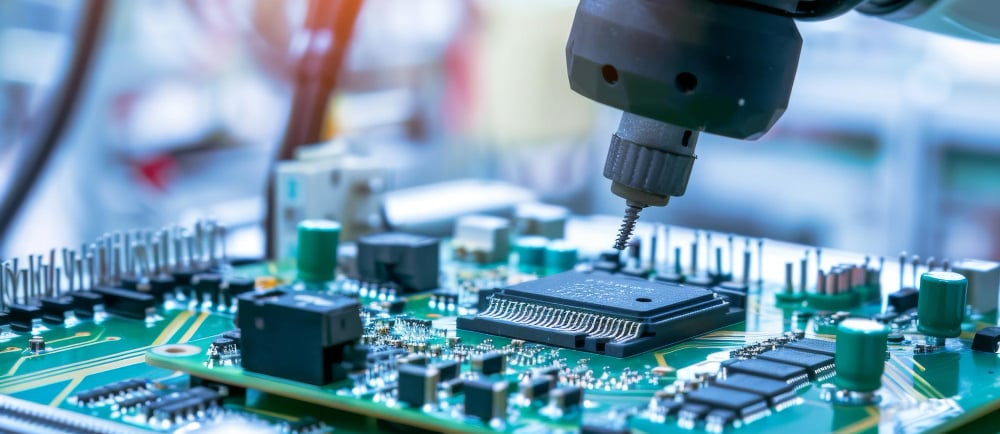
Global chip sales hit $1 trillion milestone as AI demand reshapes semiconductor industry
The global semiconductor industry crossed a historic threshold in 2026, with chip sales projected to reach $1 trillion for the first time—a milestone driven almost entirely by artificial intelligence infrastructure spending and a memory shortage that's reshaping the entire electronics supply chain.
According to the Semiconductor Industry Association (SIA), which represents most U.S. chip firms, global semiconductor sales hit $791.7 billion in 2025, a 25.6% increase over 2024. The World Semiconductor Trade Statistics (WSTS) forecast predicts 2026 sales will surge past $975 billion, approaching the trillion-dollar mark as Big Tech companies pour hundreds of billions into AI datacenter buildout.
The numbers tell the story of an industry in transformation. Advanced computing chips—the kind made by Nvidia, AMD, and Intel for AI workloads—led all categories with $301.9 billion in sales in 2025, up 39.9% year-over-year. Memory chips ranked second at $223.1 billion, climbing 34.8% as prices soared amid an AI-induced shortage that's squeezing consumer electronics makers worldwide.
AI infrastructure spending drives unprecedented chip demand
The semiconductor boom traces directly to Big Tech's massive AI infrastructure investments. Microsoft, Meta, Google, and Amazon collectively plan to spend approaching $700 billion on AI infrastructure in 2026 alone—nearly 2% of U.S. GDP. That spending translates into voracious demand for AI accelerators, high-bandwidth memory, networking chips, and power management semiconductors.
Deloitte estimates that generative AI chips will approach $500 billion in revenue in 2026, roughly half of global chip sales. AMD CEO Lisa Su raised her estimate for the total addressable market of AI accelerator chips for datacenters to $1 trillion by 2030, validating the sustained nature of this demand cycle.
The scale is unprecedented. While 2025 saw an estimated 1.05 trillion chips sold globally, AI chips represent less than 0.2% of total volume but account for nearly 50% of industry revenues. The average selling price tells the story: AI accelerators command premium pricing that dwarfs conventional semiconductors, with some high-bandwidth memory configurations costing thousands of dollars per chip.
Memory shortage creates winners and painful tradeoffs
The AI boom created a structural memory shortage that's now rippling across the entire electronics industry. Only three companies globally—Samsung, SK Hynix, and Micron—can manufacture high-bandwidth memory (HBM) at scale, creating an oligopoly with significant pricing power.
Market analysis firm Counterpoint predicts memory chip prices could climb as much as 40% through the second quarter of 2026, with some analysts expecting increases of 60 to 70%. That's created enviable economics for chipmakers. "They're in the enviable position of being able to dictate price and terms more than ever," said Tobey Gonnerman, president of semiconductor distributor Fusion Worldwide.
For memory manufacturers, the AI datacenter market offers margins that consumer electronics simply can't match. That's led Samsung, SK Hynix, and Micron to prioritize high-margin HBM chips for AI accelerators over conventional DRAM and NAND for smartphones, laptops, and other consumer devices.
The result: consumer electronics makers face unprecedented cost pressures. Dell and Lenovo are planning price increases up to 20% in early 2026. Apple CEO Tim Cook acknowledged memory shortages are constraining iPhone 17 supply despite record demand. Even Raspberry Pi, which built its reputation on affordable single-board computers for education, announced its second price increase in months.
Regional growth patterns reflect AI infrastructure buildout
The WSTS forecast shows growth accelerating across all major markets in 2026, but the Americas and Asia Pacific are leading—reflecting where AI infrastructure investment concentrates. The Americas market benefits from hyperscaler datacenter construction across the U.S., while Asia Pacific captures manufacturing of the chips that populate those datacenters.
Europe and Japan are forecast to see more moderate low double-digit growth, highlighting how the AI chip boom amplifies existing regional competitive advantages. TSMC's dominance in advanced manufacturing, Samsung's memory leadership, and U.S. companies' design prowess all compound in this environment.
The geographic concentration raises strategic concerns. TSMC manufactures the vast majority of cutting-edge AI chips, creating supply chain vulnerabilities that governments worldwide are trying to address through domestic semiconductor manufacturing incentives. The U.S. CHIPS Act, European Chips Act, and similar programs aim to diversify production, but building advanced fabs takes years and tens of billions in capital.
Structural demand vs. cyclical risk
The semiconductor industry has historically been cyclical, with boom-bust patterns driven by inventory cycles and demand fluctuations. The current expansion feels different—driven by what industry analysts describe as structural rather than cyclical demand.
AI infrastructure represents a multi-year buildout comparable to previous technology platform shifts like the internet's commercialization or mobile computing's rise. Microsoft alone projects it could spend up to $250 billion on AI infrastructure in 2027, suggesting the investment wave isn't peaking but accelerating.
However, questions linger about whether enterprise AI adoption will materialize fast enough to justify building datacenter capacity years ahead of proven demand. Some investors worry that Big Tech is overbuilding infrastructure in an arms race, creating risks of stranded assets if AI monetization disappoints.
The counterargument: AI is already generating revenue through productivity gains, creative tools, coding assistants, and enhanced search. Unlike previous hype cycles, AI is demonstrably useful today, with applications expanding rapidly across industries from drug discovery to software development to customer service.
What the trillion-dollar milestone means for the industry
Crossing the $1 trillion threshold cements semiconductors as critical economic infrastructure on par with energy or telecommunications. Chips aren't commodities—they're strategic assets that determine national competitiveness, military capability, and economic prosperity.
For chip companies, the moment validates decades of Moore's Law engineering that increased transistor density, reduced power consumption, and enabled the AI revolution. The industry's ability to manufacture billions of transistors on chips smaller than a fingernail represents one of humanity's most impressive engineering achievements.
For consumers and businesses, the milestone brings both opportunity and challenge. AI applications promise productivity gains, creative capabilities, and scientific breakthroughs that justify the investment. But the memory shortage demonstrates how AI infrastructure demand can squeeze supply and drive price increases for everyday electronics from laptops to smartphones to appliances.
The path forward requires balancing AI's transformative potential against the real costs of building the infrastructure to support it—costs that are increasingly being passed along the supply chain to end users.
FAQ: Global semiconductor market hits $1 trillion
Why are chip sales reaching $1 trillion in 2026?
Artificial intelligence infrastructure spending is driving unprecedented demand for advanced computing chips and high-bandwidth memory. Big Tech companies are collectively investing approaching $700 billion in AI datacenters in 2026, requiring massive quantities of AI accelerators, memory chips, and supporting semiconductors.
Which chip categories are growing fastest?
Advanced computing chips (for AI workloads) lead with 39.9% growth, followed by memory chips at 34.8% growth. These two categories account for over $500 billion in combined sales, representing more than half the global semiconductor market.
Why are memory chip prices increasing so dramatically?
Only three companies globally—Samsung, SK Hynix, and Micron—can manufacture high-bandwidth memory (HBM) at scale. They've prioritized high-margin AI datacenter chips over consumer electronics, creating shortages that are pushing prices up 40-70% through Q2 2026.
How does this affect consumer electronics pricing?
Consumer device manufacturers face unprecedented cost pressures from memory chip shortages, with PC makers like Dell and Lenovo planning price increases up to 20%. Smartphones, laptops, and even devices like Raspberry Pi are seeing price hikes as chipmakers prioritize AI infrastructure over consumer products.
Is the semiconductor boom sustainable or another bubble?
Industry analysts describe current demand as structural rather than cyclical, driven by multi-year AI infrastructure buildout comparable to the internet's commercialization. However, questions remain about whether enterprise AI adoption will materialize fast enough to justify the massive infrastructure investments.
Which regions are benefiting most from the chip boom?
The Americas and Asia Pacific are leading growth, reflecting where AI infrastructure investment concentrates. The U.S. captures hyperscaler datacenter spending, while Asia Pacific dominates chip manufacturing through companies like TSMC and Samsung.