
Google Names Xreal as Lead Android XR Partner
Google has named Xreal as its lead partner for Android XR hardware, integrating Gemini AI. However, despite these advancements, AR glasses still face significant adoption barriers that partnerships alone cannot overcome.
TECH NEWSXR
1/15/20265 min read

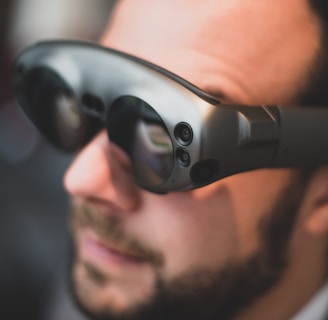
Google Just Named Xreal Its Lead AR Partner. Here's Why Nobody Cares.
Google just announced that Xreal is now their lead hardware partner for Android XR glasses, deepening a multi-year partnership with Gemini AI integration and new flagship AR glasses coming in 2026.
The press release uses words like "revolutionary," "transformative," and "the future of computing." Tech blogs are dutifully writing up the announcement. Industry analysts are projecting market growth.
And absolutely none of it matters, because nobody wants to wear computers on their face.
The Partnership Sounds Great (On Paper)
To be fair, what Google and Xreal announced is legitimately impressive from a technology standpoint:
Deep integration of Google's Gemini AI into Xreal's AR glasses
Android XR as the unified platform, potentially solving the fragmentation problem that plagued earlier AR attempts
A new flagship AR device launching in 2026
Multi-year commitment suggesting this isn't just a one-off experiment
Xreal is a solid choice for Google. They've been making AR glasses longer than most competitors, they have actual products in market (not just demos), and their hardware is genuinely well-designed.
But here's the thing: none of these partnerships address the actual reasons why AR glasses haven't taken off.
The Problems Nobody Talks About
1. You Look Ridiculous
Let's just say it: wearing AR glasses in public makes you look like a tech bro cosplaying as a cyborg. Google Glass taught us this lesson in 2013. Snap Spectacles reinforced it. Every AR glasses product since has tried to design around it, and none have succeeded.
Xreal's glasses are sleeker than Google Glass ever was. They look more like chunky sunglasses than sci-fi props. But "less ridiculous" is still ridiculous. Most people don't want to be early adopters of face computers, and they especially don't want to be the first person in their social circle wearing them.
2. The Use Cases Are Niche
What are AR glasses actually for? The pitch usually includes:
Turn-by-turn navigation displayed in your vision
Notifications floating in front of your eyes
Taking hands-free photos and videos
Virtual screens for productivity
Here's the problem: your smartphone already does all of these things, and it doesn't require you to wear anything on your face.
Navigation? Glance at your phone or use audio directions. Notifications? Your smartwatch handles that. Photos? Literally everyone has a camera in their pocket. Virtual screens? Get a laptop.
AR glasses are a solution in search of a problem. They offer marginal convenience improvements for tasks that aren't actually pain points.
3. Battery Life Is Still Terrible
Current AR glasses last maybe 2-4 hours of active use before needing a recharge. That's not a full workday. It's barely a movie. Smartphones had this problem in 2010 and people hated it then too.
Battery technology hasn't made the breakthrough needed for all-day AR glasses. Until it does, these devices will always feel like prototypes rather than products.
4. The Privacy Backlash Is Real
When you wear AR glasses with cameras on them, everyone around you assumes you're recording them. Whether you are or not is irrelevant—the assumption kills social acceptance.
Restaurants, gyms, concerts, and other venues are already preemptively banning AR glasses. Try wearing them to a school or government building and see what happens. The list of places where AR glasses are socially or legally acceptable keeps shrinking, not expanding.
5. The Price Is Absurd
Xreal's current glasses cost $400-$500. Meta's Ray-Ban smart glasses are $300. Apple's Vision Pro is $3,500.
For context, you can buy a flagship smartphone for $800-$1,000 that does exponentially more than AR glasses. The value proposition just isn't there.
But The Industry Keeps Trying
Why do companies like Google keep investing in AR glasses despite all these problems?
Because the potential is enormous. If AR glasses could truly replace smartphones as the primary computing device, the company that wins that transition would dominate the next era of computing just like Apple and Google dominated the smartphone era.
That's a big enough prize to justify years of development on products that nobody's buying yet.
But potential doesn't pay the bills, and being years early is indistinguishable from being wrong.
The Actual Timeline
Tech industry optimists love to predict that AR glasses are "just around the corner" and will be mainstream within 2-3 years. They've been saying this since 2013.
Here's a more realistic timeline:
2026-2027: Partnership announcements like Google-Xreal generate buzz, but sales remain in the low hundreds of thousands globally. Tech enthusiasts buy them. Nobody else cares.
2028-2030: Battery technology improves slightly. Prices drop to $200-$300 range. Designs get marginally less dorky. Adoption remains niche.
2031-2035: Maybe—and this is a big maybe—AR glasses start gaining traction with specific professional use cases (surgeons, mechanics, warehouse workers). Consumer adoption remains minimal.
2036+: If we're lucky, AR glasses become common enough that seeing someone wear them doesn't immediately mark them as a weirdo. That's still a decade away. Maybe more.
For comparison: smartphones took about 5 years to go from iPhone launch to mainstream adoption. AR glasses are 13+ years into their journey and still nowhere close.
What About Apple?
Surely if Apple makes AR glasses, that'll change everything, right? They have a track record of taking nascent technologies and making them mainstream.
Maybe. But remember that Apple's Vision Pro launched at $3,500 and sales have been disappointing. Apple delayed their more affordable Vision Pro model and there are no confirmed plans for Apple AR glasses in the near future.
If Apple—the company that convinced everyone they needed $1,000 phones and $300 wireless earbuds—can't crack the XR market, what makes us think Google and Xreal will?
The Android XR Platform Won't Fix This
Google is betting that Android XR will solve AR's problems by creating a unified platform that attracts developers and provides consistent user experiences across hardware.
That's a good strategy for platform fragmentation. It does nothing to address:
Social acceptance
Battery life
Unclear value proposition
High prices
Privacy concerns
You can't solve cultural and practical problems with better software.
The Uncomfortable Truth
Here's what nobody in the industry wants to admit: AR glasses might just be a bad idea that will never achieve mass adoption.
Not every technology category succeeds. 3D TVs were supposed to revolutionize home entertainment—they flopped. Segways were supposed to change transportation—they became a punchline. QR codes were dead for years before COVID accidentally revived them.
Maybe AR glasses are smartphones-for-your-face the same way Segways were electric-stand-up-mobility. Technically impressive, genuinely innovative, and completely unnecessary for 99% of people.
When AR Might Work
To be clear: AR technology itself is valuable. AR applications on smartphones (Pokémon GO, IKEA furniture preview, Snapchat filters) have proven extremely popular.
What hasn't worked is putting AR on your face all day.
The form factor that might eventually work is contact lenses. If AR can be delivered through contact lenses that look normal and don't broadcast "I'm recording you" vibes, adoption could take off.
But that technology is decades away, not years.
The Bottom Line
The Google-Xreal partnership is a sign that big tech companies are still committed to the AR glasses vision. It's not a sign that consumers are ready to adopt them.
Xreal will release new AR glasses in 2026. Google will integrate Gemini AI. Tech reviewers will say they're "the best AR glasses yet." Industry analysts will project growth.
And regular people will continue using their smartphones, because they work great and don't require wearing computers on your face.
AR glasses aren't right around the corner. They might not be coming at all. And this partnership, impressive as it sounds, doesn't change that reality.
The future of computing might involve AR. But it probably doesn't involve everyone walking around looking like extras from a Black Mirror episode.