
MWC 2026 Highlights: Samsung Galaxy AI & More
MWC 2026 wrapped up on March 5 in Barcelona, showcasing major announcements like Samsung Galaxy AI, Xiaomi 17 Ultra, Honor Robot Phone, Nothing Phone 4A, and more. Discover all the latest innovations and trends from the event.
GENERAL
3/5/20267 min read
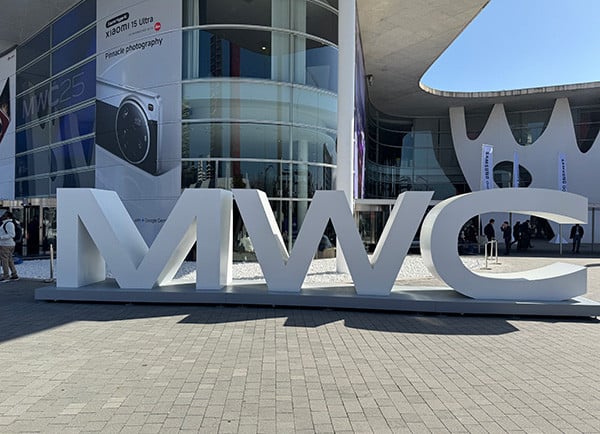
MWC 2026 wrap: every major announcement from Barcelona
Mobile World Congress 2026 closed its doors in Barcelona today after four days that confirmed what the industry has been arguing about for two years: AI is no longer a feature. It's the product. Nearly every announcement at this year's show — from Samsung's booth in Hall 3 to Qualcomm's keynote on the main stage — was organized around a single question: what does AI enable that wasn't possible before?
The answer, judging by MWC 2026, is a lot. But the show also surfaced real tension between marketing ambition and shipping reality. Several "AI phone" announcements were short on specifics, long on demos that required precisely controlled conditions. The hardware that actually impressed — Samsung's Galaxy S26 ecosystem, Xiaomi's Leitzphone, Nothing's Phone 4a — succeeded because the AI claims were grounded in things you could actually touch.
Here's everything that mattered at MWC 2026, separated by what's real and what's still a roadmap.
Samsung: Galaxy AI as an ecosystem platform
Samsung occupied the largest presence at MWC 2026 and used it to make a strategic argument that goes beyond the Galaxy S26, which launched at Unpacked on February 25. The message: Galaxy AI isn't a phone feature. It's an operating system-level platform that runs across phones, wearables, laptops, and tablets — an integrated ecosystem play designed to compete with Apple's vertically integrated hardware-software lock-in.
At the Samsung booth in Hall 3, the centerpiece was the Galaxy S26 series. Samsung also showcased:
Galaxy Book6 Pro and Book6 Ultra — new laptops with Galaxy AI productivity features including live translation, meeting transcription, and on-device summarization powered by the same AI infrastructure as the phones
Galaxy Watch8 series — health AI features including personalized running coaching, sleep analysis, and mindfulness guidance
Galaxy Tab S11 — large-screen AI experiences, particularly for document and media workflows
Galaxy Buds4 series — AI agents embedded in earbuds that respond to context without requiring you to pull out your phone
The most significant strategic announcement was confirming that Perplexity is fully integrated as a first-party AI partner at the OS level — not just as an app, but woven into the Galaxy AI agent framework. Users can switch between Bixby, Perplexity, and other AI agents without friction. It's a direct contrast to Apple's approach of owning the full AI stack.
Samsung also previewed satellite connectivity expansion through regional carrier partnerships — a sign that the company is positioning Galaxy devices as the connectivity platform for markets where terrestrial 5G coverage remains inconsistent.
The enterprise angle was notable. Samsung quietly released a Galaxy S26 Ultra Enterprise Edition just before MWC — same hardware and price as the consumer version, but bundled with Knox Suite, centralized device management, and a 3-year enhanced warranty with 2-year product lifecycle guarantee. It's a direct pitch to regulated industries that need MDM-compliant hardware without paying a premium for niche enterprise devices.
Xiaomi: Leica's Leitzphone is the camera phone to beat
Xiaomi made the most audacious hardware announcement at MWC 2026 with the Xiaomi 17 Ultra — branded in partnership with Leica as the Leitzphone. The camera system is genuinely exceptional: a 1-inch main sensor with a Leica-tuned optical system, a periscope telephoto capable of 5x optical and 100x space zoom, and a front camera that Leica helped design from the ground up.
The Leitzphone is priced in the premium tier — expected to land around $1,299 globally — and targets professional photographers and content creators who want DSLR-quality results from a pocket device. In hands-on demos at the Xiaomi booth, the night photography in Barcelona's low-lit demonstration areas was striking. The color science is distinctly Leica: muted, film-like, with excellent shadow retention.
What makes the Leitzphone commercially significant is that it gives Xiaomi a credible flagship narrative in Western markets, where it has historically struggled against Samsung and Apple on brand perception. If the camera performance holds up in independent review, this is the phone that could change that.
Honor: a robot phone that isn't a product yet
Honor's most talked-about MWC moment was the Honor Robot Phone concept — a device with a small articulated arm that physically emerges from the body of the phone to take self-portraits, hold itself upright, or gesture during calls. It generated enormous social media attention.
It's not shipping. Honor was clear that this was a concept demonstration, not a product roadmap announcement. The mechanism is interesting engineering but the durability, cost, and practical use cases are all unresolved. File this under "things that were fun to see at MWC" rather than "things to care about commercially."
What Honor did announce that matters: the Honor 300 series for global markets, with competitive mid-range pricing and Magic OS 9, Honor's AI assistant platform. The 300 Ultra targets the $799–$899 range with a strong telephoto system. It's a legitimate Samsung Galaxy A-series competitor in European markets.
Nothing: Phone 4a launches today
Nothing launched the Phone 4a officially at MWC 2026, with full specs and pricing revealed today, March 5. The Phone 4a continues Nothing's approach of clean Android with a distinctive transparent back and the Glyph LED notification interface — now in its fourth generation with expanded notification choreography and the ability to display progress indicators for third-party apps.
Nothing hasn't released final pricing publicly as of this writing, but leaks suggest a starting price in the £349–$399 range — below the Pixel 10a's $499 entry point. Colors at launch: Pink, White, Blue, and Black.
The Phone 4a is a strong mid-range product for users who want a genuinely distinctive Android device at a price that doesn't require finance. The Glyph interface has moved from novelty to functional over four generations — it genuinely replaces a lot of the notification checking behavior that currently requires you to unlock your phone. For commuters and light professional users, that's a real quality-of-life improvement.
The caveat: Nothing's software update commitment is shorter than Google's 7-year Pixel promise, and the AI features are less deeply integrated than Tensor-powered Pixel devices. The Nothing Phone 4a is the better aesthetic choice. The Pixel 10a is the better long-term investment.
Qualcomm: 6G by 2029
Qualcomm used MWC 2026 to formalize its 6G commercial timeline: chips ready for device integration by 2028, commercial deployments from 2029. The 6G specification work at 3GPP is expected to begin in earnest in 2027–2028, making Qualcomm's timeline aggressive but not impossible.
The company also showcased its Snapdragon 8 Elite Gen 5 at scale — the chip inside the Galaxy S26 series — and provided early performance benchmarks for the next-generation platform. The key Qualcomm message at MWC: on-device AI inference is accelerating faster than network AI, and the NPU roadmap through 2027 reflects that.
Samsung and KT Corporation's X-MIMO verification in the 7 GHz band (announced February 20) was referenced repeatedly in 6G discussions at the show — a sign that Korean operators and manufacturers are further ahead on 6G field trials than European carriers.
Europe's 5G warning: "we could be out of the game"
The most politically charged moment at MWC 2026 came from the European operator community. Multiple European telecoms executives used panel sessions to warn that Europe risks being "out of the 5G game" due to fragmented spectrum policy, insufficient network investment relative to the US and Asia, and a regulatory environment that has made it harder for European carriers to consolidate and generate the cash flows needed for infrastructure buildout.
The warning is substantive. European 5G coverage still lags South Korea, the US, and China by meaningful margins, and the gap is widening rather than narrowing. The €100 million European satellite network investment announced this week is a fraction of what's needed.
The commercial implication: European enterprises deploying AI workloads at the edge face connectivity bottlenecks that US and Asian counterparts don't. This is a structural disadvantage for European tech companies and an opportunity for the carriers that do invest aggressively.
Lenovo and others: AI PCs take the next step
Lenovo used MWC to showcase its ThinkPad X1 lineup with dedicated on-device AI processing, emphasizing enterprise AI workflows that keep sensitive data off the cloud. The pitch is directly in line with what enterprise buyers are asking for: AI-powered productivity without compliance risk.
Several other PC makers at MWC announced AI PC configurations with NPU performance targets above 50 TOPS — the threshold Microsoft has set for Copilot+ PC certification. The AI PC transition is moving faster than many analysts expected two years ago, and MWC 2026 confirmed that laptop AI is no longer a premium add-on but a baseline expectation for enterprise devices.
What didn't show up at MWC 2026
Apple wasn't at MWC. It never is. But the absence was felt more acutely this year because the MacBook Pro M5 and MacBook Air M5 announced this week are shipping on March 11, and several MWC panel discussions referenced Apple silicon's on-device AI capabilities as the benchmark everyone else is trying to match.
Foldables had a quieter MWC than expected. After years of concept phones and improving but still expensive foldables, the category seems to be settling into a premium niche rather than a mainstream growth segment. Samsung's Galaxy Z Fold6 successor wasn't shown; the focus was entirely on the Galaxy S26 slab lineup.
Key takeaways
MWC 2026 — bottom line
Samsung made the strongest showing by framing Galaxy AI as an ecosystem platform, not a phone feature
Xiaomi's Leitzphone is the camera phone to beat in the premium tier if reviews hold up
Nothing Phone 4a launches today — the best aesthetic mid-range Android at its price point
Qualcomm confirmed 6G chips by 2028, commercial deployments from 2029
Europe's 5G warning is legitimate — fragmented policy is creating real infrastructure gaps
AI PCs crossed the mainstream threshold — 50 TOPS NPU is now a baseline, not a premium feature
FAQ: MWC 2026
When and where was MWC 2026?
Mobile World Congress 2026 ran from March 2 to March 5 at Fira Gran Via in Barcelona, Spain. It is the world's largest mobile industry trade show, organized by the GSMA.
What was the biggest announcement at MWC 2026?
Samsung's Galaxy AI ecosystem showcase was the centerpiece — demonstrating how Galaxy AI integrates across phones, laptops, wearables, and tablets. The Xiaomi 17 Ultra (Leitzphone) generated the most hardware buzz.
Did Apple announce anything at MWC 2026?
No. Apple does not participate in MWC. However, Apple's MacBook Pro M5 and MacBook Air M5 announcements this week were referenced throughout the show as competitive benchmarks.
What is the Nothing Phone 4a and when does it go on sale?
The Nothing Phone 4a is a mid-range Android phone with Nothing's signature Glyph LED interface. It launched officially at MWC 2026 on March 5, with pricing expected in the £349–$399 range depending on market.
What did Qualcomm announce at MWC 2026?
Qualcomm confirmed its 6G commercial timeline: chips ready for device integration by 2028, with commercial network deployments beginning in 2029. The company also provided performance previews for the post-Snapdragon 8 Elite Gen 5 platform.
What happened with foldables at MWC 2026?
Foldables had a quieter show than in previous years. No major new foldable launches were announced. The category appears to be consolidating as a premium niche rather than growing into the mainstream.