
NVIDIA GTC 2026: Key Highlights & Expectations
NVIDIA GTC 2026 is set for March 16–19 in San Jose. Jensen Huang teases a groundbreaking chip that will surprise the world. Discover what to expect, including Feynman, Rubin Ultra, and advancements in physical AI.
AIGENERAL
3/10/20265 min read
Nvidia GTC 2026 preview: what Jensen Huang will reveal on March 16
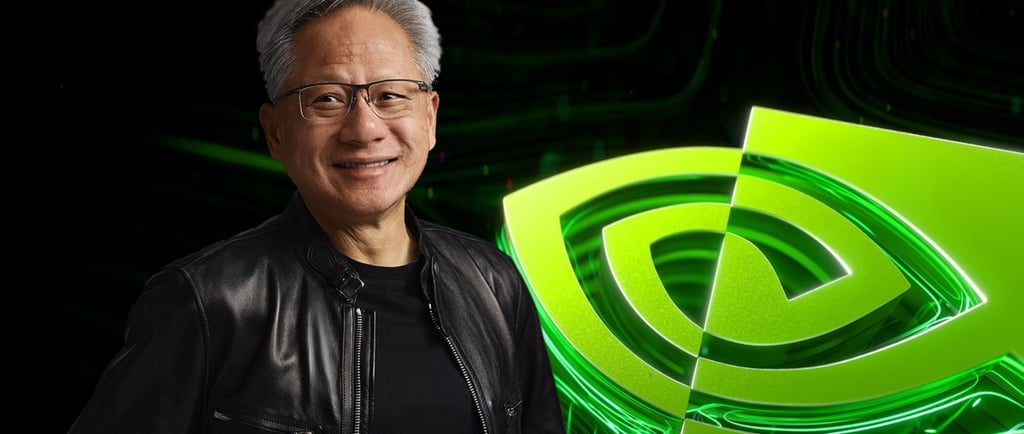
Nvidia GTC 2026 opens on Monday, March 16 in San Jose, California — and CEO Jensen Huang has already promised to show the world a chip "it has never seen." That's not routine conference hype. Huang made the same category of promise at GTC 2025 when he unveiled Blackwell. He delivered. This year, every major analyst and supply chain source is pointing at one thing: the Feynman architecture, Nvidia's next-generation GPU platform built on TSMC's 1.6nm A16 process.
The stakes are real. Nvidia's fiscal Q4 FY2026 revenue came in at $68.1 billion — up 73% year-over-year — and the company has guided Q1 FY2027 at $43 billion. Hyperscalers collectively committed nearly $650–700 billion to AI infrastructure in 2026. What Nvidia reveals at GTC shapes how that capital gets allocated for the next two years. A credible Feynman preview would validate continued Nvidia GPU dominance well into 2028. A soft announcement would invite AMD, Broadcom, and custom silicon providers to close the gap.
Here's everything you need to know before Monday's keynote.
What Nvidia GTC 2026 is — and why it matters
GTC (GPU Technology Conference) is Nvidia's annual developer conference, but calling it a conference undersells it. GTC is where Nvidia announces the hardware that will power AI infrastructure for the next 12–24 months. More than 30,000 attendees from 190 countries will gather at San Jose's SAP Center for the March 16–19 event, with Jensen Huang's keynote scheduled for 11 a.m. PT on Monday, March 16.
The conference covers what Nvidia calls the five layers of AI: energy, chips, infrastructure, models, and applications. Sessions span 1,000+ technical talks, with topics ranging from agentic AI workflows to physical AI and robotics.
For enterprise buyers and investors, the keynote is the only session that matters on day one. The next 1,000 sessions explain and expand on whatever Huang announces from the SAP Center stage.
The main event: Feynman architecture on TSMC A16
Multiple supply chain reports — from Chosun Biz, TrendForce, and WCCFTech — converge on a single headline: Nvidia will unveil or preview its Feynman architecture at GTC 2026, potentially making it the first public outing for chips built on TSMC's A16 1.6nm process.
Feynman is significant for several reasons:
Process node: TSMC's A16 uses a 1.6nm-class node with Super Power Rail (SPR), delivering meaningfully better power efficiency than the N2 (2nm) process used in Apple's M5 chips. Nvidia is reportedly TSMC's first — and possibly only — high-volume A16 customer in the early production window.
Silicon photonics: Feynman is expected to introduce optical interconnects between rack-scale compute units, replacing traditional copper electrical signals with light. This addresses the bandwidth bottleneck that limits how fast data moves between GPUs in large clusters.
Architectural step-change: While Vera Rubin (Nvidia's current-generation platform, confirmed in mass production as of CES 2026) uses conventional electrical interconnects, Feynman represents a fundamental rethink of how AI compute scales beyond single-rack deployments.
Industry analyst commentary positions Feynman as roughly analogous to the transistor-to-integrated-circuit transition: not just faster chips, but a different way of connecting them.
What else Nvidia is expected to announce
Beyond Feynman, the GTC 2026 agenda signals several additional announcement categories:
Vera Rubin extensions. Even if Feynman is the headline, Nvidia is expected to provide additional detail on Rubin Ultra — a dual-die configuration combining two Rubin GPU cores — and clarify the HBM4 memory roadmap with Samsung and SK Hynix. Both memory companies are confirmed GTC exhibitors specifically to showcase HBM4.
Physical AI and robotics. Nvidia's Isaac robotics platform and its Omniverse digital twin software have expanded significantly. With Caitlin Kalinowski's departure from OpenAI's robotics division making news this week, there's a clear opportunity for Nvidia to position itself as the infrastructure layer for the robotics buildout.
AI factories and inference efficiency. According to GTC planning documents, 2026's conference centers on AI factories — the infrastructure architecture for running inference at scale — rather than just raw training performance. Huang has said agentic AI tasks consume 10–50x more compute per task than single-shot inference. Inference efficiency is the commercial lever that matters most right now.
PC chips. Reports from Korean media suggest Nvidia may announce entry into the PC chip market — a direct challenge to Intel and AMD on their home turf, following Nvidia's expanded Meta CPU deal announced in February.
The commercial implications
The Feynman preview — even if products don't ship until 2028 — does something critically important: it locks hyperscalers into Nvidia's roadmap. When Amazon, Google, Meta, and Microsoft are collectively spending $650+ billion on AI infrastructure in 2026, procurement decisions are made 18–36 months in advance. A credible Feynman architecture gives Nvidia's enterprise customers a reason to wait for next-generation Nvidia hardware rather than hedging toward AMD's MI450 or custom silicon from Broadcom.
AMD announced its clearest MI450 roadmap signals in early March, and Meta's $60 billion AMD deal in February confirmed that hyperscaler GPU diversification is happening at scale. What Nvidia reveals at GTC 2026 is partly a response to that competitive pressure — the company needs to show its architectural lead is durable, not just a single-generation advantage.
Key takeaways
Nvidia GTC 2026 runs March 16–19 in San Jose; Jensen Huang's keynote is March 16 at 11 a.m. PT
The likely headline announcement: Feynman architecture, built on TSMC's 1.6nm A16 process — the world's most advanced chip node
Feynman introduces silicon photonics (optical interconnects), which represents a fundamental architectural shift in how AI compute scales
Vera Rubin is already in mass production; GTC will provide additional Rubin Ultra detail and HBM4 roadmap
The conference also covers physical AI, inference efficiency, AI factories, and potentially Nvidia's entry into the PC chip market
Commercial implication: Feynman preview locks hyperscalers into Nvidia's roadmap through 2028, countering AMD and custom silicon competition
FAQ: Nvidia GTC 2026
When is the Nvidia GTC 2026 keynote?
Jensen Huang's keynote is scheduled for Monday, March 16, 2026 at 11 a.m. PT (2 p.m. ET / 7 p.m. BST / 8 p.m. CET) at the SAP Center in San Jose, California. It will be streamed live at nvidia.com/gtc.
What chip will Nvidia announce at GTC 2026?
The leading expectation is a preview or reveal of the Feynman architecture — Nvidia's next-generation GPU platform built on TSMC's A16 1.6nm process. Nvidia may also provide additional detail on Rubin Ultra, a dual-die extension of the current Vera Rubin platform.
What is TSMC A16?
TSMC's A16 is a 1.6nm-class chip manufacturing process featuring Super Power Rail (SPR) technology for improved power delivery. It offers better power efficiency than TSMC's N2 (2nm) process used in Apple's M5 chips. Nvidia is reportedly TSMC's first major A16 customer.
What is Feynman architecture?
Feynman is Nvidia's codename for its next-generation GPU architecture, expected to follow Vera Rubin. It is anticipated to use silicon photonics — optical interconnects — between compute units, which allows dramatically higher data transfer speeds between GPUs in large AI clusters.
Is Nvidia GTC 2026 available to watch online?
Yes. Jensen Huang's March 16 keynote will be streamed live at nvidia.com/gtc/keynote. The conference runs through March 19 with 1,000+ sessions, many of which will also be available online.
How does GTC 2026 affect AI chip stocks?
A strong Feynman reveal typically validates continued Nvidia dominance and could push Nvidia shares higher while adding pressure on AMD and Intel. A weak showing could accelerate hyperscaler diversification toward AMD MI450 and custom silicon from Broadcom and others. Watch Nvidia, AMD, Intel, TSMC, and memory chip stocks (Samsung, SK Hynix, Micron) for market reaction on March 16.