
Plaud Note Pro: AI Summaries & Tradeoffs Explained
Discover how Plaud Note Pro delivers frictionless recording and AI summaries. Learn who should use it, who might skip it, and the real tradeoffs compared to phone apps like Otter. Make an informed choice for your note-taking needs.
REVIEWAI
2/5/20264 min read
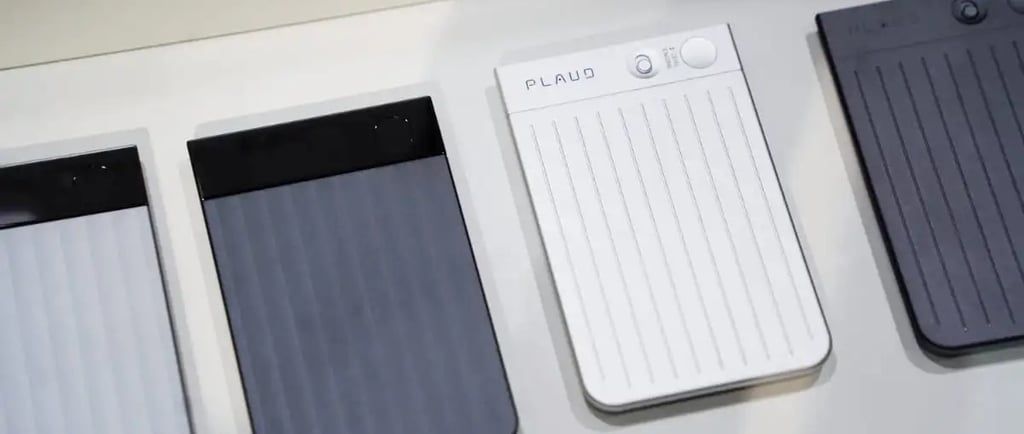
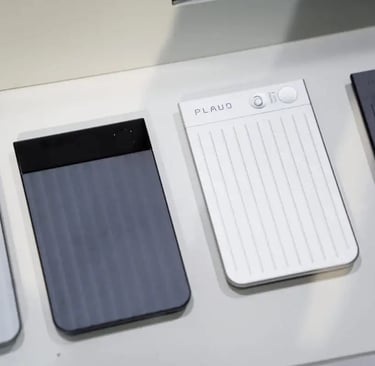
Plaud Note Pro review: when dedicated AI recording beats your phone (and when it doesn’t)
Plaud Note Pro is the kind of product that only makes sense once you admit something slightly uncomfortable: the meeting itself is no longer the work.
The work is what happens after the meeting, when someone has to turn an hour of talk into decisions, next steps, and a paper trail that can survive a week of context switching.
That is the real market for AI recorders right now. Not “people who like gadgets.” People who are drowning in conversational work.
The promise: stop taking notes, start thinking
The best pitch for Plaud Note Pro is also the most human one.
It is not about perfect transcription.
It is about attention.
If you have ever walked out of a client session and realized you remember the vibe, but not the exact commitment, you already know the failure mode. In modern knowledge work, memory is a liability. And typing notes in real time is a tax: you pay it in presence, in listening, and in the quality of the questions you ask.
Plaud’s bet is simple. A dedicated device that can be started with a single action lowers the friction to capture, and an AI layer turns that capture into something you can actually use. It is the difference between recording and documenting.
Why hardware is back (and why this one exists)
There is a reason these products keep showing up, even as phone microphones and apps get better.
Phones are multifunction machines. In meetings, that is a problem.
Put a phone on the table and it reads as distraction. It suggests notifications, messages, and half-attention. Put a small recorder on the table and it reads as intent. That social signal matters more than most spec sheets.
One Plaud user described it bluntly: in client workshops, it feels more professional to place a sleek dedicated device on the table than a personal smartphone, and it also handles unplanned phone calls more cleanly than software-only workflows.
That is the wedge Plaud is aiming at. Not the planned Zoom meeting you already run through Otter. The messy reality in between.
The quiet truth: transcription is cheap, reliability is expensive
In 2026, transcription quality is no longer the main differentiator.
The differentiator is whether you actually capture the conversation in the first place, and whether you can retrieve what matters later.
Most software-only workflows fail for boring reasons:
You forgot to hit record.
You hit record too late.
You started, then got interrupted.
You did not name the file.
You never processed the transcript.
Plaud Note Pro tries to turn that into a single behavior: press the button, handle the rest later.
If it works, it gives you back the most valuable thing in a meeting: the ability to stay in the room.
The trap: this is a subscription business wearing a device
Here is what an honest review should say upfront.
Plaud Note Pro is not a one-time purchase. It is hardware plus ongoing AI usage economics.
Many reviewers note that the free tier typically includes around 300 minutes of transcription per month, and serious usage pushes you into paid tiers. One review cites a Pro plan around $99.99 per year for 1,200 minutes per month, and an unlimited tier around $239.99 per year.[2]
Those numbers change the buyer decision.
Because the question is no longer “Is this cool?”
The question becomes “What is my cost per documented meeting?”
If you run two hours of meetings a day, unlimited is not expensive. It is defensive spending.
If you run two meetings a week, it is a luxury tax.
Who this is really for
Plaud Note Pro makes sense for people whose week is dominated by conversations with consequences:
Consultants and agency leads running workshops where decisions and commitments need receipts.
Operators and founders who live in rapid-fire alignment and follow-ups.
Researchers and journalists who want capture without fiddling.
Students who attend long lectures and actually process them.
It makes less sense for people who mainly want audio quality, or who rarely need transcripts. And it may be a non-starter if you cannot accept cloud processing for sensitive conversations.
The test that matters (and it is not the coffee shop)
A lot of reviews will tell you how it performs in noise, how it feels in the hand, and how clean the app interface looks.
That is table stakes.
The real test is one week later.
A week later, can you answer these in under a minute?
What exactly did we decide?
Who owned the follow-up?
What was the specific wording of the commitment?
If Plaud Note Pro reliably turns a meeting into a searchable artifact that survives time and distraction, it is doing its job.
If it becomes another folder of recordings you never revisit, it is just a nicer way to procrastinate on documentation.
The bigger story: conversational work is becoming infrastructure
Plaud Note Pro is not the end state. It is a transitional object.
We are moving toward a world where conversations become structured inputs into workflows: summaries into briefs, decisions into tasks, commitments into CRM notes, and meeting outcomes into operating cadence.
The device is simply the most legible on-ramp.
A physical “record” action that turns an ephemeral moment into something durable.
Whether you buy Plaud Note Pro, or you stick to phone apps, the direction is the same.
Work is becoming more conversational.
And the competitive advantage will go to the people who can turn conversations into execution without losing signal.
Bottom line
Plaud Note Pro is worth exploring if you:
regularly leave meetings with ambiguity,
need cleaner receipts for decisions,
and can justify the transcription minutes as a recurring operating cost.
It is not worth it if you:
only capture occasionally,
already have a disciplined phone workflow,
or cannot tolerate the privacy and cloud tradeoffs.
The product is not a miracle.
It is a discipline tool.
And for the right kind of work, that is exactly the point.