
Rayneo Air 4 Pro with HDR10 Launch at CES 2026
Discover the Rayneo Air 4 Pro featuring HDR10 at $299 and the X3 Pro with eSIM for phone-free operation, announced at CES 2026. Get full specs, pricing, and market positioning analysis.
AITECH NEWSXR
1/16/20267 min read
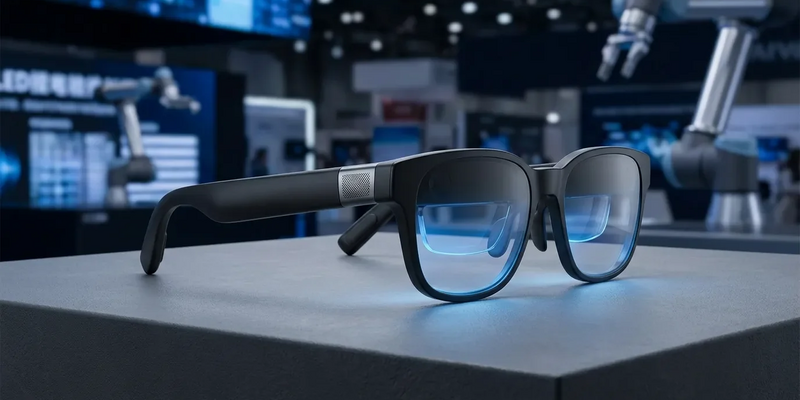
RayNeo's Two-Pronged Attack—HDR Smart Glasses at $299 and the First Phone-Free AR Glasses
While everyone's talking about Google's Android XR partnership with Xreal and Samsung's upcoming headset, RayNeo quietly announced two products at CES 2026 that might actually matter more for everyday users: the Air 4 Pro at $299 with HDR10 support, and the X3 Pro with built-in eSIM for phone-free operation.
No one's calling these game-changers. But in a market where smart glasses either cost too much or do too little, RayNeo is betting that "good enough at a great price" beats "perfect but unaffordable."
Here's whether they're right.
The Budget Play: RayNeo Air 4 Pro ($299)
The Air 4 Pro is RayNeo's answer to a simple question: what if we made display glasses that actually look good, without charging $600+?
What It Is:
The Air 4 Pro are tethered AR glasses—you plug them into your phone, laptop, or gaming device via USB-C, and they function as a wearable display. Think of them as a portable monitor you wear on your face, not a standalone computing device.
The Headline Feature: HDR10 Support
RayNeo claims the Air 4 Pro are the first consumer AR glasses to support HDR10, meaning they can display greater brightness and darkness extremes in the same picture, with more variation between them than standard dynamic range video.
For context, your phone and laptop probably support HDR already. But smart glasses haven't, which means watching HDR content on them looked flat and washed out. The Air 4 Pro changes that.
Specs Breakdown:
Display: Dual Micro-OLED panels
Resolution: 1080p per eye (standard for this price range)
Brightness: Not officially disclosed, but early reviewers report "very vibrant colors"
HDR: HDR10 support (first in category)
Field of View: Estimated 40-45 degrees
Connectivity: USB-C wired connection
Weight: ~80g (comfortable for extended wear)
Audio: Built-in speakers (open-ear design)
Compatibility: Works with phones, laptops, gaming consoles, Nintendo Switch
Price: $299
Availability: Available now
How It Compares to Xreal
The Air 4 Pro's obvious competitor is the Xreal One ($499) and Xreal One Pro ($649).
RayNeo Air 4 Pro ($299) vs Xreal One ($499):
RayNeo wins on:
Price: $200 cheaper
HDR10 support (Xreal One doesn't have this)
Value proposition for casual users
Xreal wins on:
Brighter display (up to 600 nits vs ~400 nits estimated)
Better hand tracking and spatial features
More polished software ecosystem
Premium build quality
Reality check: For watching movies, working on documents, or gaming, the Air 4 Pro delivers 85-90% of the Xreal One experience at 60% of the price. That's compelling.
For power users who want the absolute best display or plan to use advanced AR features, Xreal is still the better choice. But most people don't need the best—they need good enough at a price they can justify.
The Wild Card: RayNeo X3 Pro (Price TBA)
This is the more interesting product, even though pricing and availability details are vague.
The X3 Pro are the world's first consumer AR glasses with built-in eSIM and 4G connectivity. That means they can operate completely independently of your phone.
What "Phone-Free" Actually Means:
With traditional smart glasses, you need your phone nearby. The glasses are essentially an accessory, a second screen for your phone's apps and content.
The X3 Pro have their own cellular connection. You can:
Make and receive calls directly from the glasses
Use AI assistants without phone connectivity
Translate languages in real-time
Stream music
Get notifications
Navigate with AR directions
All without carrying a phone.
Hardware & Specs:
Processor: Qualcomm Snapdragon AR1 Gen 1
Connectivity: eSIM with 4G LTE (no 5G)
Operating System: RayNeo AR application virtual machine
AI: Built-in voice assistant with multi-language support
Translation: Real-time language translation
Audio: Built-in speakers and microphone for calls
Weight: Not disclosed (likely 90-120g due to additional components)
Battery: External pack (estimated 3-4 hours)
Price: Not announced (estimated $699-899 based on component costs)
Availability: Q2-Q3 2026
The Use Case Problem
Here's the uncomfortable question: who actually wants phone-free AR glasses right now?
Potential users:
1. Travelers
Navigating foreign cities with real-time translation and AR directions without fumbling for your phone. This is the most obvious use case.
2. Runners/Cyclists
People who want navigation, music, and call access during exercise without carrying a phone. But... won't most people want their phone for emergencies anyway?
3. Minimalists
Someone committed to reducing screen time who wants basic connectivity without a smartphone. This is a very niche audience.
4. Enterprise workers
Warehouse workers, technicians, or field service personnel who need hands-free information access. This is probably the real target market.
Reality check: For 95% of consumers, "I don't need to carry my phone" isn't actually a selling point because they're carrying their phone anyway. Keys, wallet, phone—that's the trio everyone has.
The X3 Pro solves a problem most people don't have.
Technical Limitations
Both products have constraints worth understanding:
Air 4 Pro limitations:
Tethered operation: USB-C cable required, which limits mobility
No standalone apps: Can only display what your source device outputs
Limited field of view: ~40-45 degrees means you're looking at a screen, not immersed in AR
Public awkwardness: You still look like you're wearing weird glasses
X3 Pro limitations:
4G only: No 5G means slower data speeds
Battery life: 3-4 hours estimated (needs external pack)
Limited app ecosystem: RayNeo's platform has far fewer apps than Android or iOS
Carrier support: eSIM activation may not work with all carriers globally
Processing power: Snapdragon AR1 Gen 1 is entry-level for AR (adequate but not powerful)
Market Positioning: The Budget Alternative Strategy
RayNeo's strategy is clear: be the affordable alternative in every category.
Display glasses: $299 vs Xreal's $499-649
Standalone AR: Estimated $699-899 vs future high-end competitors at $1,200+
This is the same strategy that made Chinese smartphone brands (Xiaomi, OnePlus, Realme) successful: deliver 80-90% of the premium experience at 50-60% of the price.
Why this might work:
The AR glasses market is still in early adopter phase. Most people who'd consider buying smart glasses are price-sensitive experimenters, not committed users. At $299, the Air 4 Pro is an impulse purchase. At $649, Xreal requires conviction.
Why this might fail:
AR glasses are still a "nice to have" not a "need to have." Even at $299, most consumers won't find enough value to justify the purchase. Being cheaper doesn't help if the entire category hasn't proven its usefulness yet.
The HDR Differentiator
The Air 4 Pro's HDR10 support is genuinely notable, even if it sounds like technical jargon.
Why HDR matters:
When you watch HDR content on a non-HDR display, the image is tone-mapped down to standard dynamic range. You lose detail in bright highlights and dark shadows. Everything looks flatter.
For movies and gaming, HDR makes a visible difference. If you're buying smart glasses primarily for entertainment, HDR support means you're getting the full experience.
No other $299 AR glasses offer this. RayNeo identified a feature gap and filled it.
The catch: Most content isn't HDR yet. YouTube has HDR videos, Netflix and Disney+ support HDR, and modern games render in HDR. But a lot of content you'd watch on smart glasses—presentations, documents, web browsing—doesn't benefit from HDR at all.
It's a great feature to have, but not transformational.
Competition Snapshot: Where RayNeo Fits
Budget Tier ($299-399):
RayNeo Air 4 Pro ($299) — best value, HDR support
Viture One ($439) — better optics, no HDR
Mid Tier ($499-699):
Xreal One ($499) — best overall display quality
Rokid Max ($499) — larger field of view
Xreal One Pro ($649) — hand tracking, premium features
Premium Tier ($700+):
Meta Ray-Ban Smart Glasses ($299 but limited AR features)
Future Android XR glasses from Xreal with Gemini AI ($400-600 estimated)
Standalone AR (coming soon):
RayNeo X3 Pro ($699-899 estimated)
Future Android XR standalone glasses (pricing unknown)
RayNeo sits firmly in the "affordable alternative" segment. Not the best, but the best value.
Early Reviews: What Testers Are Saying
Positive:
"The Air 4 Pro's colors are incredibly vibrant for the price"
"HDR content looks noticeably better than on the Air 3s Pro"
"At $299, these are an easy recommendation for anyone curious about AR glasses"
"Comfortable to wear for 2+ hours"
Negative:
"HDR10 is nice, but without Dolby Vision support, it's not the full premium experience"
"Tethered operation feels limiting compared to wireless alternatives"
"RayNeo's software is bare-bones compared to Xreal's ecosystem"
"The X3 Pro is interesting in theory, but without clear pricing or use cases, it's hard to get excited"
The Pros:
Air 4 Pro:
✅ Industry-leading value - HDR10 at $299 is unmatched
✅ Vibrant display - Micro-OLED delivers excellent color
✅ Lightweight - Comfortable for extended use
✅ Universal compatibility - Works with any USB-C device
✅ Impulse-buy pricing - Low enough to justify experimentation
X3 Pro:
✅ True standalone operation - First consumer glasses with eSIM
✅ No phone dependency - Genuine phone-free experience
✅ Built-in AI translation - Useful for travel
✅ Enterprise potential - Hands-free connectivity for workers
The Cons:
Air 4 Pro:
⚠️ Tethered limitation - USB-C cable reduces mobility
⚠️ No Dolby Vision - HDR10 is good, not great
⚠️ Limited software - No native apps, just display mirroring
⚠️ Field of view constraints - Still feels like looking at a screen
⚠️ Social stigma - Wearing them in public still feels awkward
X3 Pro:
⚠️ Unclear use case - Most people don't want phone-free glasses
⚠️ 4G only - No 5G means it's already dated
⚠️ Limited app ecosystem - RayNeo platform is immature
⚠️ Battery concerns - Estimated 3-4 hours isn't enough for all-day use
⚠️ Pricing unknown - Could be priced out of viability
⚠️ Q2-Q3 availability - Half a year away, competition will evolve
Who Should Buy the Air 4 Pro
Buy if:
You want to watch movies or game on a personal display
You're curious about AR glasses but don't want to spend $500+
You travel frequently and want a portable second monitor
You have a Nintendo Switch and want a bigger screen
You work on laptops in public and want privacy
Skip if:
You want untethered, wireless operation
You need advanced AR features (spatial mapping, hand tracking)
You're waiting for Android XR ecosystem to mature
You find wearing any glasses uncomfortable
Who Should Consider the X3 Pro (When It Ships)
Consider if:
You're in enterprise/field service and need hands-free connectivity
You travel internationally often and need real-time translation
You're an early adopter willing to experiment with new form factors
You genuinely want to reduce phone dependency
Skip if:
You're a typical consumer who carries a phone anyway
You need all-day battery life
You want a mature app ecosystem
You're waiting for 5G-enabled glasses
The Bottom Line
RayNeo's CES 2026 announcements represent smart product positioning, not breakthrough innovation.
The Air 4 Pro solves a real problem: Xreal and other competitors are too expensive for casual interest. At $299 with HDR10, RayNeo offers a legitimate entry point for people curious about wearable displays. It's not the best AR glasses you can buy, but it might be the best first pair of AR glasses for most people.
The X3 Pro is more speculative. Standalone AR glasses with eSIM are technically impressive, but the use case remains unclear. Enterprise applications make sense. Consumer adoption requires either a dramatic shift in how people think about connectivity, or a killer app that justifies phone-free operation. Neither exists yet.
Market Reality:
Smart glasses remain a niche category. Even at $299, the Air 4 Pro will appeal to tech enthusiasts, gamers, and frequent travelers—not mainstream consumers. The X3 Pro will likely find its market in enterprise, not retail.
But RayNeo is playing the right strategy: offer credible alternatives at lower prices, build brand recognition while the market develops, and position for scale when (if) AR glasses go mainstream.
For now, the Air 4 Pro is the easiest recommendation for anyone who's been curious about AR glasses but hasn't pulled the trigger. At $299, the downside risk is manageable. The X3 Pro? Let's wait to see pricing and real-world reviews before getting excited.
Smart glasses are still looking for their iPhone moment. RayNeo isn't delivering it. But they're making sure that when it arrives, they'll have affordable options ready