
Samsung Galaxy AI Ecosystem Announced Ahead of Unpacked
Samsung has unveiled its Galaxy AI multi-agent ecosystem, integrating perplexity just days before the Galaxy S26 Unpacked event. Discover how OS-level AI agent support will enhance flagship phones.
AIANDROIDTECH NEWS
2/22/20266 min read
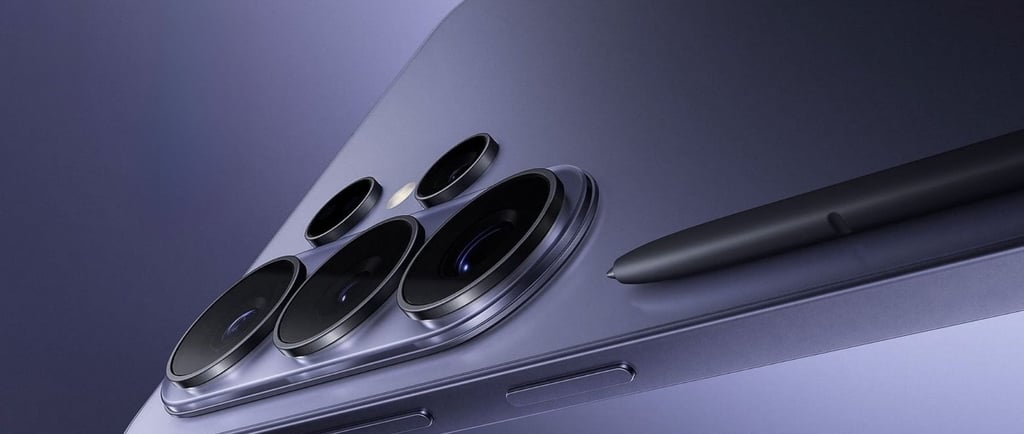
Samsung Galaxy AI expands multi-agent ecosystem with Perplexity integration ahead of S26 launch
Three days before Samsung unveils its Galaxy S26 flagship lineup, the Korean tech giant made a strategic announcement that could reshape the smartphone AI wars: Galaxy AI is becoming a multi-agent platform. On February 22, 2026, Samsung revealed that its AI framework will support multiple third-party AI agents at the operating system level, with Perplexity becoming the first partner to integrate alongside Samsung's native Bixby assistant.
The move positions Samsung's approach as the anti-Apple—an open AI ecosystem where users choose their preferred agents rather than being locked into a single assistant. While Apple recently announced it will integrate Google's Gemini alongside ChatGPT, those partnerships remain application-layer integrations that require switching between apps. Samsung's OS-level support promises seamless agent interaction without context loss or repeated commands.
Internal research drives multi-agent strategy
Samsung's decision stems from internal research showing that nearly 8 in 10 users regularly use more than two AI agents. That behavioral insight reveals a fundamental tension in current smartphone AI implementations: users want access to multiple specialized agents, but switching between apps creates friction that degrades the experience.
Consider a typical workflow: a user might prefer Perplexity for research queries, ChatGPT for creative writing, Gemini for scheduling, and a specialized agent for financial analysis. Under current architectures, each switch requires opening a new app, losing conversation context, and manually providing background information the previous agent already knew. It's inefficient and frustrating.
Samsung's multi-agent framework solves this by integrating agents at the system level. Users can invoke different agents without switching apps, maintain context across agent transitions, and leverage each agent's specialized capabilities within a unified interface. The system understands which agent is best suited for each task and can route requests accordingly—or allow users to specify their preference.
Perplexity integration targets search and research workflows
Perplexity's selection as Samsung's first third-party partner makes strategic sense. The AI search startup has carved out a niche as the "answer engine" rather than traditional search, providing direct responses with citations rather than link lists. That capability complements rather than competes with Samsung's Bixby, which focuses on device control and personal assistance.
The integration will allow Galaxy S26 users to invoke Perplexity for research queries, fact-checking, and information discovery without leaving their current app. If a user is reading an article and wants deeper context on a reference, they can ask Perplexity directly through Galaxy AI rather than switching to a browser. The agent can access screen content, understand context, and provide relevant answers with source citations.
For Perplexity, the partnership represents massive distribution. Samsung shipped over 260 million smartphones in 2025, making it the world's largest Android manufacturer. Even if only a fraction of Galaxy S26 buyers use Perplexity regularly, that translates to millions of new users—and potentially subscribers to Perplexity's premium tier.
For Samsung, Perplexity adds credibility to its multi-agent strategy. Rather than announcing the framework with only Samsung's own agents, the immediate third-party partnership demonstrates openness and shows developers that Samsung is serious about building an ecosystem.
Competitive implications challenge Apple's closed approach
The timing of Samsung's announcement—just days before the February 25 Galaxy Unpacked event—serves multiple strategic purposes. First, it generates pre-launch buzz around AI capabilities rather than just hardware specs. Second, it positions the Galaxy S26 as the "open AI phone" in direct contrast to Apple's more controlled ecosystem.
Apple's recent integration of Google Gemini into Siri represents a significant strategic shift, but it remains fundamentally different from Samsung's approach. Apple maintains tight control over how third-party AI integrates with iOS, requiring explicit user permission for each interaction and limiting access to system-level features. Samsung's OS-level agent support suggests deeper integration with fewer restrictions.
The competitive dynamic mirrors the broader Android vs iOS philosophy: openness and user choice versus integration and consistency. Android users historically prefer customization and flexibility, while iOS users value polish and simplicity. Samsung's multi-agent approach caters to its existing user base while potentially attracting switchers who want AI flexibility that iOS doesn't offer.
However, Apple's closed approach has advantages. Tight control enables better privacy protections, more consistent user experiences, and easier troubleshooting when issues arise. Samsung will need to prove its multi-agent framework can deliver comparable reliability and security without the chaos that sometimes accompanies too much openness.
Technical challenges of OS-level agent integration
Building a multi-agent framework that actually works requires solving several complex technical challenges. First, context management: agents need access to relevant information without creating security vulnerabilities or privacy risks. Samsung must ensure that one agent can't access sensitive data from another without user permission, while still enabling useful information sharing when appropriate.
Second, conflict resolution: what happens when multiple agents offer contradictory advice or compete for control? Samsung needs clear hierarchies and user-friendly ways to resolve ambiguity. If Bixby and Perplexity both try to answer the same query, which response gets priority?
Third, performance optimization: running multiple AI agents simultaneously creates computational overhead that could drain batteries and slow device performance. Samsung's implementation must be efficient enough that multi-agent support doesn't noticeably impact user experience, especially on mid-range devices with less powerful processors.
Fourth, developer adoption: Samsung's multi-agent framework only succeeds if developers actually integrate their AI agents. That requires developer-friendly APIs, clear documentation, and incentives to invest engineering resources in Samsung-specific implementations rather than just building web or cross-platform apps.
Privacy and security considerations intensify with multiple agents
Multi-agent architectures introduce new privacy risks that Samsung must address. When users grant multiple AI agents access to personal data, messages, photos, and other sensitive information, the attack surface expands significantly. A vulnerability in any one agent could expose data across the ecosystem.
Samsung emphasized that its multi-agent framework maintains user control, allowing granular permissions for each agent. Users can specify what data each agent can access, revoke permissions at any time, and see audit logs of agent activity. Those controls are essential for enterprise adoption, where IT departments need assurance that corporate data remains protected even as employees use multiple AI assistants.
The framework also needs to handle data residency and sovereignty requirements. Different AI agents may process data in different geographic regions with varying privacy regulations. Samsung must ensure its multi-agent architecture complies with GDPR in Europe, India's data protection laws, and other regional requirements—a complex challenge as regulations evolve rapidly.
Commercial success depends on developer ecosystem growth
Samsung's multi-agent strategy ultimately succeeds or fails based on developer adoption. If dozens of AI agents integrate with Galaxy AI over the next year, users gain genuine choice and flexibility. If only a handful participate, the framework becomes a gimmick rather than a meaningful differentiation.
Samsung needs to actively court AI companies, provide technical support for integration, and potentially offer financial incentives for early partners. The company should prioritize high-value categories: productivity (Notion, Microsoft), creativity (Adobe, Canva), vertical specialists (legal, medical, financial), and entertainment (music, gaming).
The February 25 Unpacked event will likely showcase additional agent partnerships beyond Perplexity, signaling breadth of ecosystem support. Samsung may also announce developer tools, API documentation, and partnership programs to accelerate agent integration through 2026.
Galaxy S26 launch positions Samsung in AI phone race
The multi-agent announcement sets expectations for the Galaxy S26 reveal on February 25. Beyond the usual hardware improvements—better cameras, faster processors, refined designs—Samsung is positioning its flagship as the definitive "AI phone" for users who want choice and flexibility rather than a single dominant assistant.
The Galaxy S26 series is expected to include enhanced on-device AI processing with Samsung's latest Exynos chips (in some regions) or Qualcomm's Snapdragon platforms optimized for AI workloads. On-device processing enables faster responses, better privacy through local computation, and functionality that works offline—all critical for compelling AI experiences.
Memory chip shortages driven by AI infrastructure demand have pushed component costs up 30-40% year-over-year, likely resulting in $50-100 price increases for the Galaxy S26 lineup. The Ultra model may start at $1,299-1,349, making Samsung's AI differentiation strategy even more important to justify premium pricing against aggressive Chinese competitors offering capable devices for hundreds less.
The smartphone AI wars heat up
Samsung's multi-agent strategy reflects broader industry recognition that AI will define smartphone competition for the next decade. The question is no longer whether phones will have AI, but which AI philosophy wins: Apple's integrated single-assistant approach, Samsung's open multi-agent platform, or Chinese manufacturers' cost-optimized local models.
For consumers, Samsung's announcement is genuinely good news. Competition drives innovation, and Samsung's commitment to multi-agent support creates pressure on Apple and others to offer more flexibility. Whether Samsung's technical execution lives up to the strategic vision remains to be seen, but the direction is promising.
The Galaxy S26 launch on February 25 will provide the first look at how Samsung's multi-agent framework actually works in practice. Until then, the announcement serves its purpose: positioning Samsung as the choice for users who want AI their way, not Apple's way.