
Samsung Galaxy Unpacked: S26 Series Price Hike
Join us for Samsung's Galaxy Unpacked event on February 25, where the S26 series will be unveiled. Expect price increases of $50-100 due to memory chip shortages and rising demand for AI infrastructure.
TECH NEWSANDROID
2/10/20265 min read
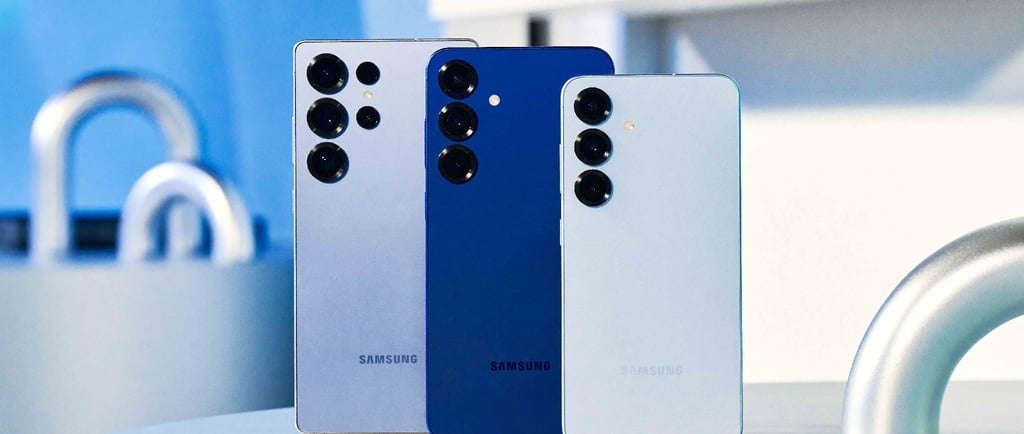
Samsung Galaxy S26 Ultra expected to start at $1,349 as chip crisis drives smartphone prices higher
Samsung's Galaxy Unpacked event is officially set for February 25, 2026, according to leaked invitations from trusted tipster Evan Blass—and consumers should brace for sticker shock. The Galaxy S26 Ultra is expected to start at $1,299-$1,349, representing a $50-100 price increase compared to last year's model, driven by memory chip shortages that are rippling across the entire consumer electronics industry.
The February 25 launch marks a strategic one-month delay from Samsung's traditional January announcement window. Pre-orders will open February 26, with retail sales starting March 11 in select markets. The event will unveil the Galaxy S26, Galaxy S26+, and Galaxy S26 Ultra alongside the Galaxy Buds 4 series.
But the real story isn't the date—it's what this launch reveals about the structural forces reshaping smartphone economics in 2026.
Why Samsung delayed (and why prices are rising)
Industry analysts attribute the February 25 timing to three converging pressures:
Memory chip supply constraints. DRAM contract prices have surged 90-95% quarter-over-quarter, with NAND flash climbing 55-60%, as AI hyperscalers consume approximately 70% of global memory chip production in 2026. Samsung's own memory division prioritizes high-margin HBM chips for AI datacenters over smartphone components—creating internal competition for supply.
Strategic positioning after Apple's AI announcements. Apple plans to announce a Gemini-powered Siri assistant in late February as part of iOS 26.4. Samsung's February 25 date positions the S26 series to counter Apple's AI narrative while capturing spring shopping season momentum. The one-month delay gives Samsung time to refine Galaxy AI features and match Apple's messaging.
Manufacturing complexity. Samsung is reportedly finalizing creaseless foldable display technology that eliminates the visible fold line on Galaxy Z devices. While this innovation won't debut until Q3 2026 with the Z Fold 7, the engineering resources required for breakthrough display tech may have strained S26 production timelines.
The price increases reflect material reality: memory could become 10% of the price of most electronics and 30% of smartphone costs in 2026, up from typical 5-8% in 2023-2024. When your suppliers double prices while AI infrastructure customers compete for the same chips, you pass costs to consumers or sacrifice margins.
What to expect from the Galaxy S26 lineup
While Samsung hasn't officially confirmed specifications, leaks from multiple sources paint a consistent picture:
Galaxy S26 Ultra will likely feature Snapdragon 8 Gen 4 processor (or potentially Samsung's Exynos 2600 in some markets), 200MP main camera with improved low-light performance, S Pen stylus support, 5,000mAh battery with 65W fast charging, and 12-16GB RAM. Pricing: $1,299-$1,349 starting MSRP. The 256GB storage tier may be eliminated to improve margins, with base models starting at 512GB.
Galaxy S26+ will share the flagship processor but drop to 50MP main camera, eliminate S Pen, and feature 4,800mAh battery. Expect pricing around $999-$1,049, up from $999 last year.
Galaxy S26 (standard model) targets $799-$849 starting price with slightly lower specifications—likely Snapdragon 8 Gen 3 or Exynos variant, 50MP camera, and 4,000mAh battery.
Galaxy Buds 4 series will debut alongside phones, likely adding improved active noise cancellation, longer battery life, and tighter Galaxy AI integration for real-time translation and voice assistance.
All models will feature enhanced Galaxy AI capabilities—Samsung's answer to Apple Intelligence. Expect on-device AI for photo editing, real-time translation, voice transcription, and smart replies. Samsung is positioning AI as the primary differentiation in a market where hardware specifications have largely plateaued.
Samsung's competitive challenge
The February 25 launch positions Samsung between multiple competitive pressures:
Apple's record iPhone momentum. Apple reported 23% year-over-year iPhone sales growth in Q1 2026—the biggest jump in four years—driven by iPhone 17 demand. Apple CEO Tim Cook cited memory shortages limiting supply despite record demand, meaning Apple is winning the chip allocation battle even with constraints.
Chinese manufacturers' price pressure. Xiaomi, Oppo, Vivo, and others offer competitive flagships at $200-400 less than Samsung's Ultra tier. The Vivo V70 Elite (expected mid-February) will reportedly feature dual 50MP cameras and 6,500mAh battery at significantly lower pricing. OnePlus 15T and Motorola Edge 70 Pro launches throughout February increase competitive intensity.
Memory shortage constraining production. Even if Samsung wanted to maintain previous pricing, component costs have risen dramatically. Dell and Lenovo are planning PC price increases up to 20% in early 2026. HP CEO Enrique Lores confirmed price hikes due to "significant" memory costs. Samsung faces the same pressures while competing with Apple for premium tier customers.
Weak upgrade cycle momentum. Most consumers keep phones 3-4 years now, up from 2-3 years historically. Unless Samsung delivers truly compelling AI features or camera improvements, convincing users to upgrade becomes harder—especially at higher prices.
The International Data Corporation forecasts the PC market could shrink 2.4-8.9% in 2026 due to memory supply constraints. Smartphones may face similar headwinds if prices rise faster than feature improvements justify.
The AI infrastructure ripple effect
Samsung's pricing dilemma illustrates how AI infrastructure buildout creates winners and losers across tech:
Hyperscalers win. Alphabet, Microsoft, Meta, and Amazon collectively plan approximately $650 billion in 2026 AI infrastructure spending. They secure memory chip supply by paying premium prices that Samsung's memory division cannot ignore.
Memory manufacturers win. Samsung, SK Hynix, and Micron control global HBM production and enjoy 30-40% year-over-year price increases. Only three companies can manufacture high-bandwidth memory at scale, creating an oligopoly with significant pricing power.
Smartphone makers lose. Apple, Samsung, and others compete for constrained consumer-grade memory supply while hyperscalers drain production capacity. Even Samsung—which manufactures its own memory—prioritizes high-margin datacenter chips over internal smartphone allocation.
Consumers lose. Smartphone prices rise while AI infrastructure spending inflates costs across consumer electronics categories. Smart appliances, laptops, and tablets face similar component cost pressures.
This represents a structural shift—not a cyclical downturn. Hyperscaler AI infrastructure demand differs from consumer markets. Microsoft, Meta, Google, and Amazon need continuous capacity expansion to train larger models and serve inference workloads. Consumer device demand fluctuates with economic cycles. Memory manufacturers rationally prioritize stable, high-margin datacenter orders over cyclical consumer electronics.
Analysts expect the shortage to persist through at least mid-2026, meaning Galaxy S26 pricing may preview smartphone economics for the next 12-18 months.
Should you wait or buy?
For consumers considering the Galaxy S26 series, here's what the February 25 launch timing means:
Wait if you currently own a Galaxy S24 or S25 series device. The improvements will be incremental (better camera, faster processor, enhanced AI features) rather than transformative. Paying $1,300+ for modest upgrades doesn't make sense unless your current phone is broken or severely degraded.
Consider buying if you're on a Galaxy S22 or older device. Two-to-three generation leaps deliver meaningful camera, battery, and performance improvements that justify premium pricing.
Evaluate alternatives. Google's Pixel 10a (expected late February) will offer excellent camera performance and clean Android experience at $499-549. Chinese manufacturers like Xiaomi and OnePlus deliver flagship specs at $200-400 less than Samsung Ultra models.
Watch for promotions. Samsung typically offers aggressive trade-in deals ($600-800 credit for older devices) and pre-order bonuses (free memory upgrades, bundled accessories) that reduce effective pricing by $300-500. Carrier subsidies and 0% financing make $1,300 phones accessible to more buyers.
The February 25 announcement will clarify Samsung's strategy for competing in a market where component costs rise, AI becomes table stakes, and Chinese competitors deliver compelling value. Whether consumers accept $100 price increases depends on whether Samsung delivers AI features and camera improvements that justify premium pricing.
For the broader tech industry, Samsung's launch will signal whether consumer electronics can pass AI-driven cost increases to buyers—or whether demand collapses when smartphones cost as much as laptops.