
The AI Hardware Productivity Paradox: Why Your $300 Voice Recorder Might Not Save You Any Time
Plaud, Ticnote, and the new wave of AI wearables promise to revolutionize productivity. Here's what they actually deliver—and what they cost beyond the price tag.
FEATUREAI
1/16/20263 min read
The Promise
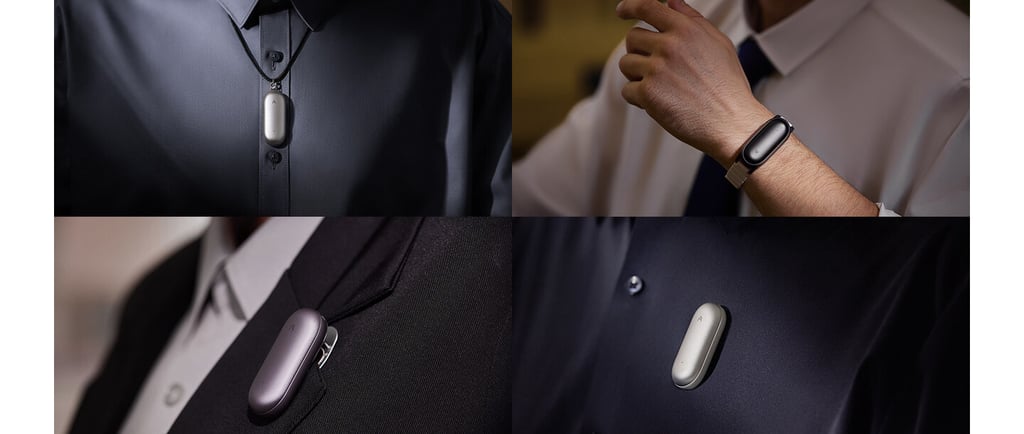
At CES 2026, the hardware landscape shifted from "AI in the cloud" to "AI in your pocket." Companies like Plaud and Ticnote are betting that the future of productivity isn't another app—it's dedicated hardware that captures, transcribes, and organizes your thoughts before you even touch a keyboard.
Plaud's NotePin S and Desktop App promise seamless meeting capture and AI-powered summaries. Ticnote positions itself as the hardware layer for knowledge workers, recording ambient conversations and automatically generating action items. The pitch is seductive: work smarter, not harder, with zero friction.
But after evaluating the current generation of AI hardware productivity tools, a more complex picture emerges.
The Reality: What Works
Transcription Quality is Exceptional
Modern AI hardware has solved the transcription problem. Plaud NotePin S achieves 95%+ accuracy in controlled environments, even with multiple speakers. The combination of on-device processing and cloud refinement means you get usable transcripts within seconds of ending a recording.
Meeting Fatigue Reduction
For back-to-back video calls, AI note-takers genuinely help. Instead of splitting attention between listening and typing, users can focus on the conversation. Post-meeting summaries capture key decisions without manual review of hour-long recordings.
Searchable Knowledge Base
The killer feature isn't the recording—it's the retrieval. Six months of meetings become searchable in natural language. "What did the client say about pricing in Q3?" returns relevant clips instantly.
Async Communication Enhancement
For distributed teams, voice memos processed through AI hardware compress 5-minute rambling updates into 30-second summaries. This actually works and saves time.
The Hidden Costs
1. Subscription Fatigue
The $300 hardware is just the entry fee. Plaud charges $79-99/year for cloud processing beyond 600 minutes monthly. Ticnote's premium tier runs $12.99/month. For teams of 10, you're looking at $1,500+ annually in subscription costs on top of hardware.
2. The Integration Tax
These tools don't replace your existing workflow—they add to it. You still need:
Your project management tool (Asana, Notion, Linear)
Your communication platform (Slack, Teams)
Your note-taking system (Notion, Obsidian, Roam)
AI hardware generates more content that needs manual routing. Early adopters report spending 15-20 minutes daily organizing AI-generated summaries into existing systems.
3. Social and Professional Friction
Recording meetings requires consent. In practice, this means:
Starting every call with disclosure
Clients and partners declining to participate
Internal politics around who reviews transcripts
One VP of Marketing reported that 40% of external meetings declined recording, making the tool useful for only internal standups.
4. Cognitive Overhead
Paradoxically, always-on recording creates anxiety:
Did I start/stop recording correctly?
Is the battery charged?
Did I accidentally record confidential information?
Which of 50 daily recordings is the important one?
The mental checklist doesn't disappear—it shifts.
The Feasibility Matrix
High Value Use Cases ✅
Consultants billing by the hour (automatic time tracking)
Journalists conducting interviews (searchable quotes)
Researchers analyzing qualitative data (thematic coding)
Remote managers with 8+ meetings daily (sanity preservation)
Low Value Use Cases ❌
Individual contributors with <3 meetings weekly
Creative work requiring deep focus (distraction overhead)
Highly regulated industries (compliance risk)
Teams already using meeting bots (redundancy)
The Complexity Factor
Setup Complexity: Medium (3/5)
Initial configuration takes 30-45 minutes. Ongoing maintenance (firmware updates, battery charging, cloud sync troubleshooting) adds 10 minutes weekly.
Integration Complexity: High (4/5)
Getting AI-generated content into your actual workflow requires custom automation (Zapier, Make) or manual copy-paste. No tool offers seamless two-way sync with major platforms.
Behavioral Complexity: Very High (5/5)
The hardest part isn't the technology—it's building new habits:
Remembering to wear/carry the device
Positioning it correctly for audio capture
Reviewing summaries within 24 hours (or they pile up)
Training your brain to trust the system
Behavioral adoption takes 3-4 months, during which productivity often decreases as users manage dual systems.
The Verdict
Buy if:
You have 15+ hours of meetings weekly
Your company will reimburse hardware + subscriptions
You have executive support for recording meetings
You already have automation skills (or budget for consultants)
Wait if:
You're hoping to "try it out" without organizational buy-in
You work primarily in deep focus mode
Your meeting load is <5 hours weekly
You're already struggling with tool overload
The Bigger Question
AI hardware productivity tools reveal an uncomfortable truth: the bottleneck isn't capture, it's action.
We don't lack information—we drown in it. Adding more captured content, even AI-summarized, doesn't solve the fundamental problem: deciding what matters and doing something about it.
The most productive teams at CES 2026 weren't using AI voice recorders. They were having fewer, shorter meetings and shipping faster.
Sometimes the best productivity tool is the one you don't buy.
Bottom Line: AI hardware productivity tools deliver on technical promises but underdeliver on time savings for most users. The future is promising, but the present is messy, expensive, and friction-filled. Unless you're in a high-value use case, your time is better spent reducing meeting load than recording it.